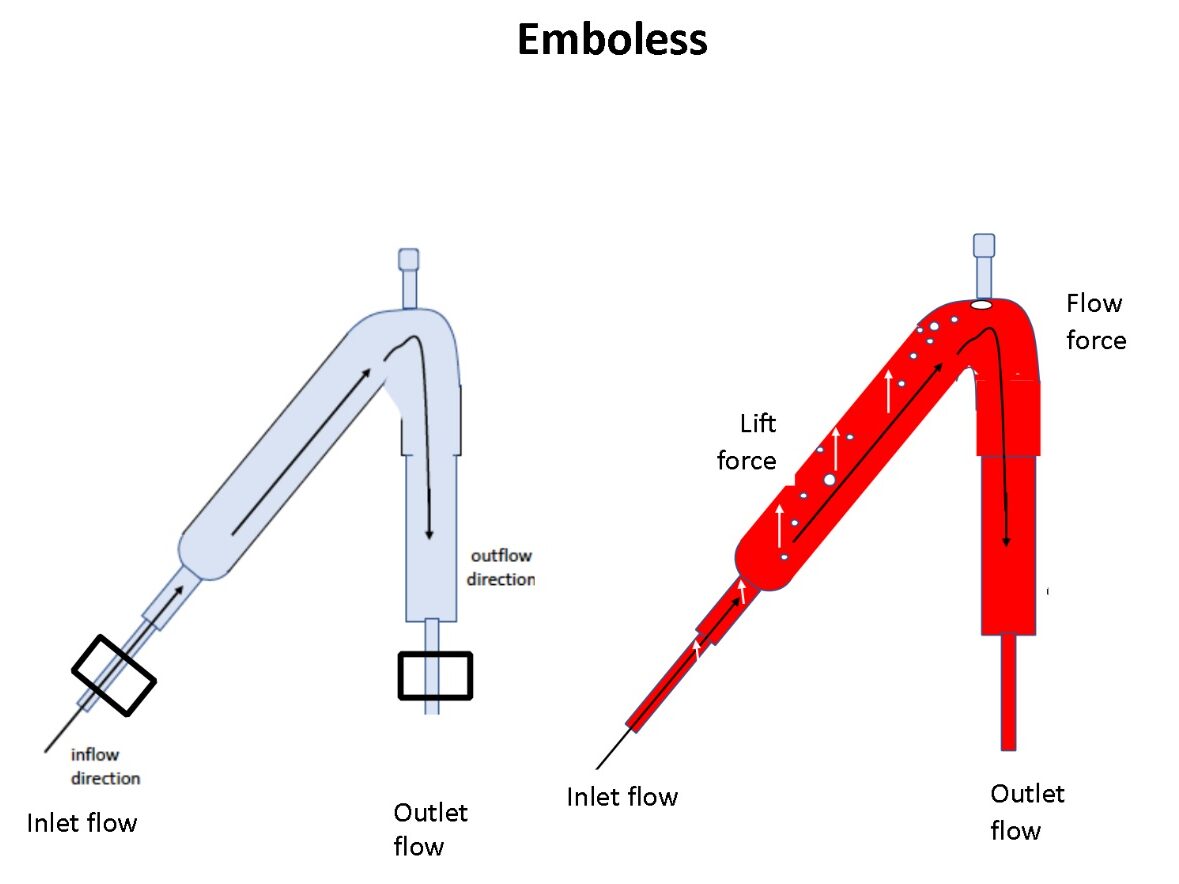
A degassing chamber for significant reductin of microbubbles in any fluid such as blood, infusion fluids, drug development and technical procedures.
Applicable for clinical use such as for acute and chronic haemodialysis, apheresis procedures, infusion technology and technical equipment.
Microbubble complications
Air contamination of the blood of the patient appears in conjunction with infusion of fluid, injections of drugs and during extracorporeal treatments such as dialysis, apheresis, and cardio-pulmonary bypass.
Larger amounts may lead to instant death while smaller amounts such as microbubbles will cause microemboli by the gas bubble itself and further by the attached clot that appears around and attached to the bubble (See figure).
A single microemboli will cause a local damage in the tissue where it deposits. If this is the lung, a scar will develop but experienced side effects may recover with no or limited side effects to the patient. If the localization of the microemboli is in a crucial part of the body such as regulating center in the heart or brain severe consequences may appear, such as sudden death or a crucial stroke.
Numerous microbubble exposures could lead to tissue damage that will sum up over time, causing progressive organ damage.
To limit gas exposure the concept of including a venous chamber in a blood line before the blood or infusion fluid returns to the patient was introduced to enable air/gas to evaporate out of the fluid already in the 1950th…?
However, we have investigated venous chambers in clinical use for dialysis and found that the efficacy to remove air bubbles is strongly limited (See laboratory work, Jonsson et al 2023). Most dialysis devices do not alarm for microbubble contamination if the size of a bubble is less than 500µm diameter.
Bubble reduction
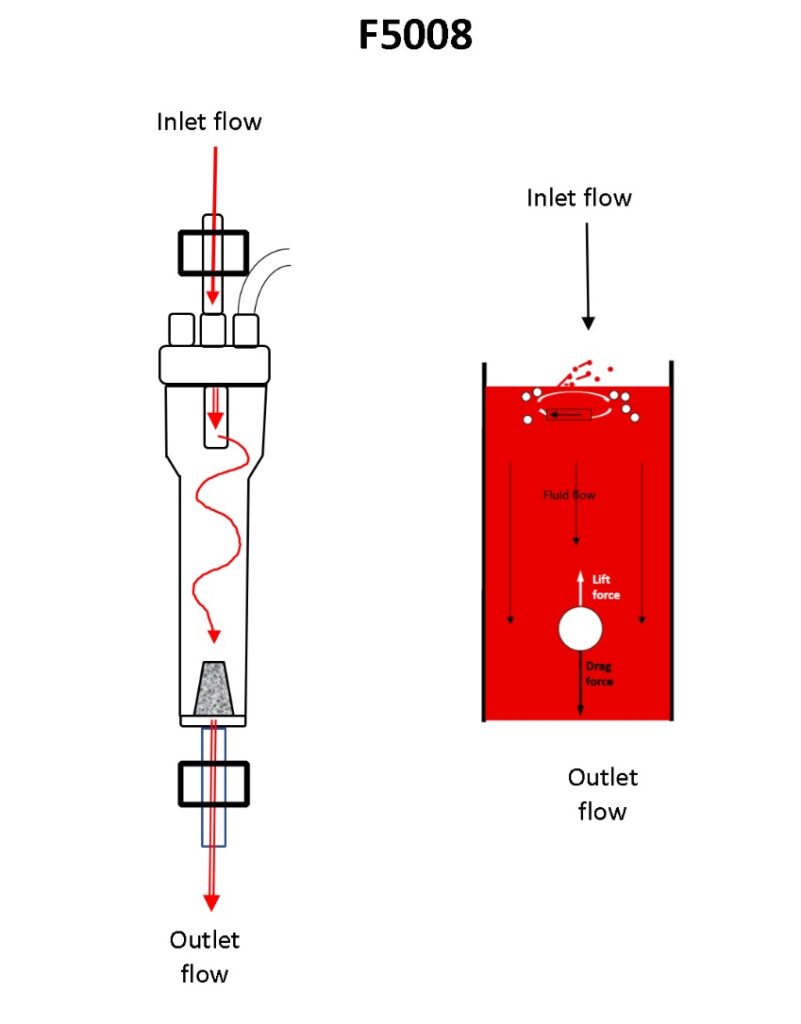
In a Fresenius 5008 venous chamber the blood flow enters from the top and exits at the bottom. Microbubbles then push against their lift force downwards by the blood flow.
In the Emboless® venous chamber the blood flow enters from above towards the top before turning downwards to the exit. In the rising blood flow part of the chamber, the lift force of gas bubbles are supported to merge and retain at the top.